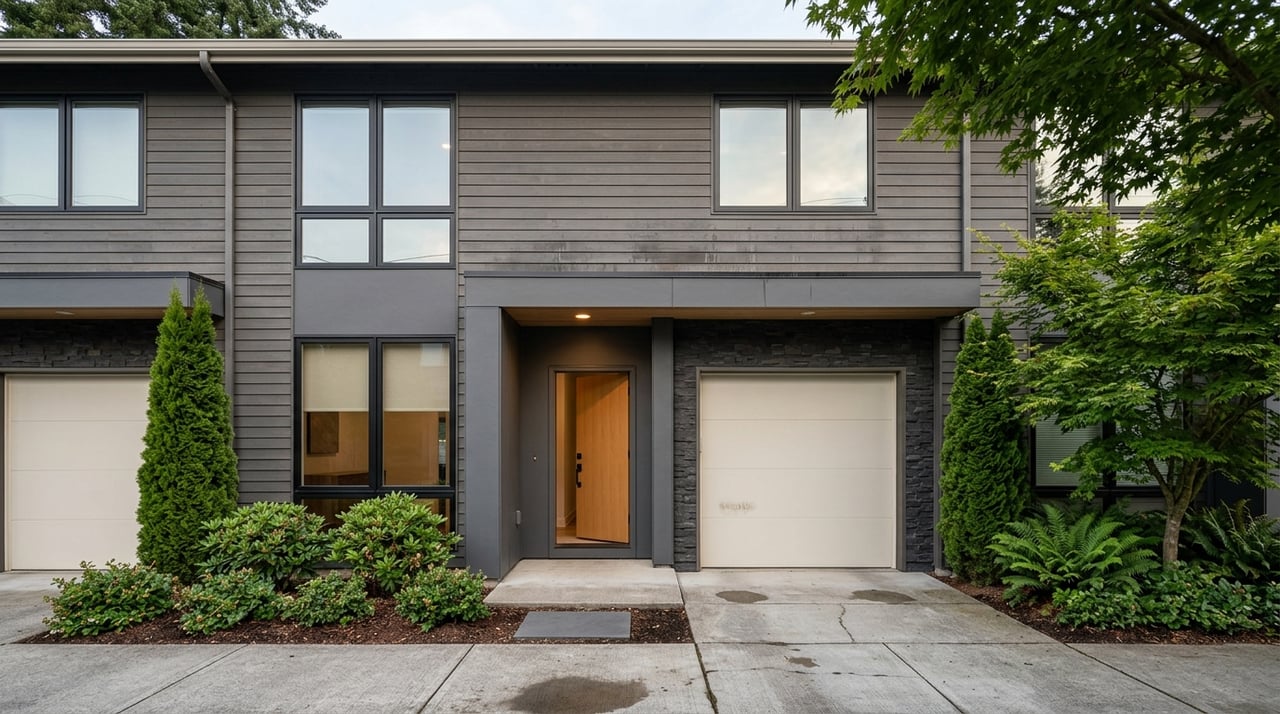
Redmond WA Housing Market: How Tech Influences Buyers
July 23, 2026
July 23, 2026
If you have ever wondered why Redmond housing stays expensive even when the broader market feels quieter, the answer often starts with tech. Redmond is not just another Eastside city with strong job growth. It is one of the region’s biggest employment hubs, and that has a direct effect on who buys here, what types of homes get the most attention, and how quickly well-positioned listings move. In this guide, you’ll see how Redmond’s tech scene shapes demand, pricing, inventory, and the next phase of the market so you can make smarter decisions. Let’s dive in.
Redmond has an unusually high concentration of tech employment. According to the city’s economic development strategic plan, information, communication technology, and interactive media is the city’s most concentrated industry, with a location quotient of 11. That same report says the sector accounted for 76% of the 21,000 jobs added from 2012 to 2022.
Microsoft plays a major role in that story. The city reports that Microsoft’s Redmond campus employs more than 47,000 workers on a 502-acre campus. Redmond’s employer roster also places Microsoft far ahead of other local employers, with Amazon, Meta, and Nintendo of America also among the city’s top employers.
For you as a buyer or seller, this matters because a large base of well-paid workers supports steady housing demand. Even when market headlines sound mixed, Redmond remains closely tied to major Eastside employment centers. That helps explain why desirable homes can still draw strong attention.
Redmond’s housing needs assessment shows that only 31% of residents both lived and worked in Redmond in 2017. It also found that 89% of the city’s workforce commuted from outside the city. That tells you Redmond functions as both a job center and a housing destination within a larger regional market.
The city’s strategic planning documents also point to high development costs, limited land availability, and a shortage of affordable workforce housing. In practical terms, that means demand has been meeting real supply limits for years. When that happens in a city with strong employer concentration, housing pressure tends to stick around longer.
This is one reason Redmond can feel competitive even in a more balanced market. You are not just competing with current residents. You are often competing with buyers who want easier access to major employment centers across the Eastside.
As of May 2026, Redfin reported a median sale price of $1.299 million over the prior three months. That was essentially flat year over year, with homes selling in about 12 days and receiving about two offers on average. Redfin also reported 161 homes sold in May 2026, down 26.9% from the prior year.
At first glance, flat pricing may sound like the market has paused. But the longer view matters more in Redmond. The city’s 2023 economic development analysis says the median sale price rose 166% between January 2012 and October 2023, while median monthly rent increased 50% from 2015 to 2023.
So if you are trying to read the market, it helps to separate short-term movement from long-term structure. A flat year does not erase the larger story of strong appreciation and ongoing affordability pressure.
Today’s market is not identical to the frenzy of past years. Homes are still moving quickly by many standards, but the pace is more measured than during peak intensity. About 12 days on market and roughly two offers per home suggest that buyers may have a little more room to evaluate options, yet well-prepared listings are still attracting attention.
For buyers, that creates a market where strategy matters more than speed alone. For sellers, it means pricing and presentation still need to be sharp. Redmond is not a market where you can count on weak positioning being forgiven.
Redmond’s housing mix helps explain where many buyers focus their search. The city’s 2024 housing element says 46% of housing units are in multifamily structures with five or more units, 37% are detached single-family homes, and 17% are duplex-multiplex units.
The same report notes that most new housing units constructed in Redmond are multifamily. It also says the median structure year is 1989, with nearly half of all units built in 1990 or later. That means newer condos, apartments, and attached homes play a major role in how the market functions.
If you are shopping in Redmond, this affects both your options and your expectations. Detached homes remain important, but attached housing often provides more access to the market, especially for buyers who want newer finishes, lower maintenance, or a commute-friendly location.
City planning documents say Redmond lacks a diverse range of middle housing, including duplexes, multiplexes, and townhomes. At the same time, the city’s current residential-zones framework allows detached homes, duplexes through sixplexes, townhouses, stacked flats, courtyard apartments, and cottage housing in Neighborhood Residential areas.
That shift signals a broader push toward more varied housing types. For buyers, it means townhomes and other attached options are likely to remain a meaningful part of the market. For sellers, it means your home may be compared not only against nearby resale listings, but also against newer attached alternatives that appeal to convenience-focused buyers.
This matters especially for first-time and move-up buyers who want a balance of space, condition, and monthly cost. In Redmond, that sweet spot is often found in newer attached inventory.
Housing geography also helps explain where demand tends to be strongest. Redmond’s housing needs assessment shows apartment and condo clusters in downtown, Overlake, Bear Creek, and other corridor-adjacent areas. Detached housing is more common on the city’s outskirts.
That pattern matters because many buyers are trying to reduce commute friction while still getting the home style they want. Homes in areas with easier access to major employment centers, transit, and everyday services often attract outsized attention. Newer attached homes in these pockets can be especially appealing because they combine location and lower maintenance.
If you are deciding where to focus your search, it helps to think beyond square footage alone. In Redmond, convenience and access often carry real market value.
Transit is a major part of Redmond’s next housing chapter. Sound Transit opened the first 2 Line segment between South Bellevue and Redmond Technology Station on April 27, 2024. It then opened the Marymoor Village and Downtown Redmond stations on May 10, 2025, and completed the East Link connection to Seattle on March 28, 2026.
That expanded rail access changes how many buyers think about location. Commute patterns can become more flexible, and station-area housing can become more desirable over time. In a market already shaped by major employment centers, better transit adds another layer of long-term demand support.
The City of Redmond has also said it is implementing a transit-oriented development focus area around the light rail station, including additional height for properties close to the station. That suggests the city sees station areas as a key part of future growth.
Redmond’s housing page says the city is planning to accommodate 24,800 new homes between 2019 and 2050. It also states that about 73% of those homes would need to be affordable to households earning 50% of area median income or less to meet estimated need.
The 2024 housing element adds that 68% of existing income-restricted homes are within a half-mile walk of high-capacity transit. Together, these facts point to a clear planning direction. Downtown, Overlake, station areas, and other transit-served corridors are likely to remain central to how new housing gets added.
For buyers, that may create more future options in attached and transit-oriented housing. For sellers, it reinforces the value of properties that already offer strong access to stations, employment centers, and everyday convenience.
If you are buying in Redmond, it helps to be realistic about where competition tends to show up. The strongest buyer interest is often in turnkey homes, newer townhomes, and properties that reduce commute friction to Microsoft, Redmond Technology, Downtown Redmond, Marymoor Village, and Overlake.
That does not mean every listing will be a bidding war. It does mean the most appealing combinations of condition, location, and convenience can move quickly. Having a clear budget, a defined must-have list, and a calm decision process can make a big difference.
It is also smart to compare housing types with an open mind. In Redmond, a well-located townhome or condo may offer a stronger fit than stretching for a detached home farther out, especially if daily convenience and future resale are high priorities for you.
If you are selling, the tech-driven nature of Redmond’s market can work in your favor when your home matches what buyers want most. Updated homes, flexible floor plans, low-maintenance features, and proximity to transit or major employment clusters tend to position well.
That said, buyers at Redmond price points are usually informed and selective. They notice condition, layout, and value right away. Thoughtful pricing, strong preparation, and clear positioning are often what separate a smooth sale from a listing that sits longer than expected.
In this kind of market, success is rarely about hype. It is about understanding the buyer pool and aligning your home with the reasons people choose Redmond in the first place.
Redmond’s tech scene does more than create headlines. It shapes the buyer pool, supports pricing, influences which housing types matter most, and reinforces the importance of transit-connected areas. Even when year-over-year numbers look steady, the underlying drivers remain powerful.
If you are planning a move in Redmond, the key is to look at the full picture. Jobs, housing mix, transit expansion, and city planning all work together here. When you understand those pieces, it becomes much easier to buy or sell with confidence.
If you want thoughtful, data-driven guidance for buying or selling on the Eastside, Hemalatha Venu offers calm support, local insight, and clear strategy every step of the way.
Stay up to date on the latest real estate trends.


Hemalatha Venu believes real estate should feel informed, transparent, and genuinely supportive—not overwhelming. Through thoughtful strategy, data-driven insight, and a calm, relationship-first approach, she helps clients make confident decisions while feeling supported every step of the way.